Imagine a scenario where a school needs to evacuate students quickly. The PA system might start the process, but teachers may not be able to stay connected with decisionmakers and law enforcement once they and their students reach the evacuation site.
That was the situation at the Stoughton School District.
“Nobody was able to communicate from our evacuation site to our building,” said one school official. “There were lots of cell phones and everyone calling each other back and forth, and not getting that signal through because everybody was trying to call at the same time.”
Thankfully, it turned out the incident that led to the evacuation wasn’t a threat, but it made it clear that the school needed a better way to communicate. That’s why the Stoughton School District invested in two-way radios for schools. This article explains why your school should, too.
WATCH THE VIDEO: Stoughton Area School District Results
Article at a glance:
- Why aren’t cell phones reliable during an emergency?
- How do digital radio systems improve school safety?
- Which school staff should be assigned a school two-way radio?
- Questions to ask before purchasing a school radio system
- Why partner with an experienced school communications provider?
Why aren’t cell phones reliable during an emergency?
Cell phones are valuable communication tools, but they are not designed to meet every communication need during a school emergency. During fast-moving incidents, staff need reliable, immediate communication that supports coordination across an entire campus. Relying on cellular communication makes that more difficult for numerous reasons.
Network congestion and delayed communication
Cellular networks are shared by everyone in the area. During emergencies, a sudden increase in phone calls, text messages, and mobile data usage can overload local networks, resulting in failed communications.
Making a phone call requires finding a contact, dialing a number, and waiting for the other person to answer. Text messages also depend on recipients seeing and responding to the message. These steps can introduce delays when information needs to be shared immediately.
One-to-one conversations
Most phone calls connect only two people at a time. Keeping multiple staff members informed often requires additional calls, text messages, or group chats. As an incident evolves, maintaining a common operating picture across administrators, teachers, security personnel, and other staff becomes increasingly challenging.
Hands occupied
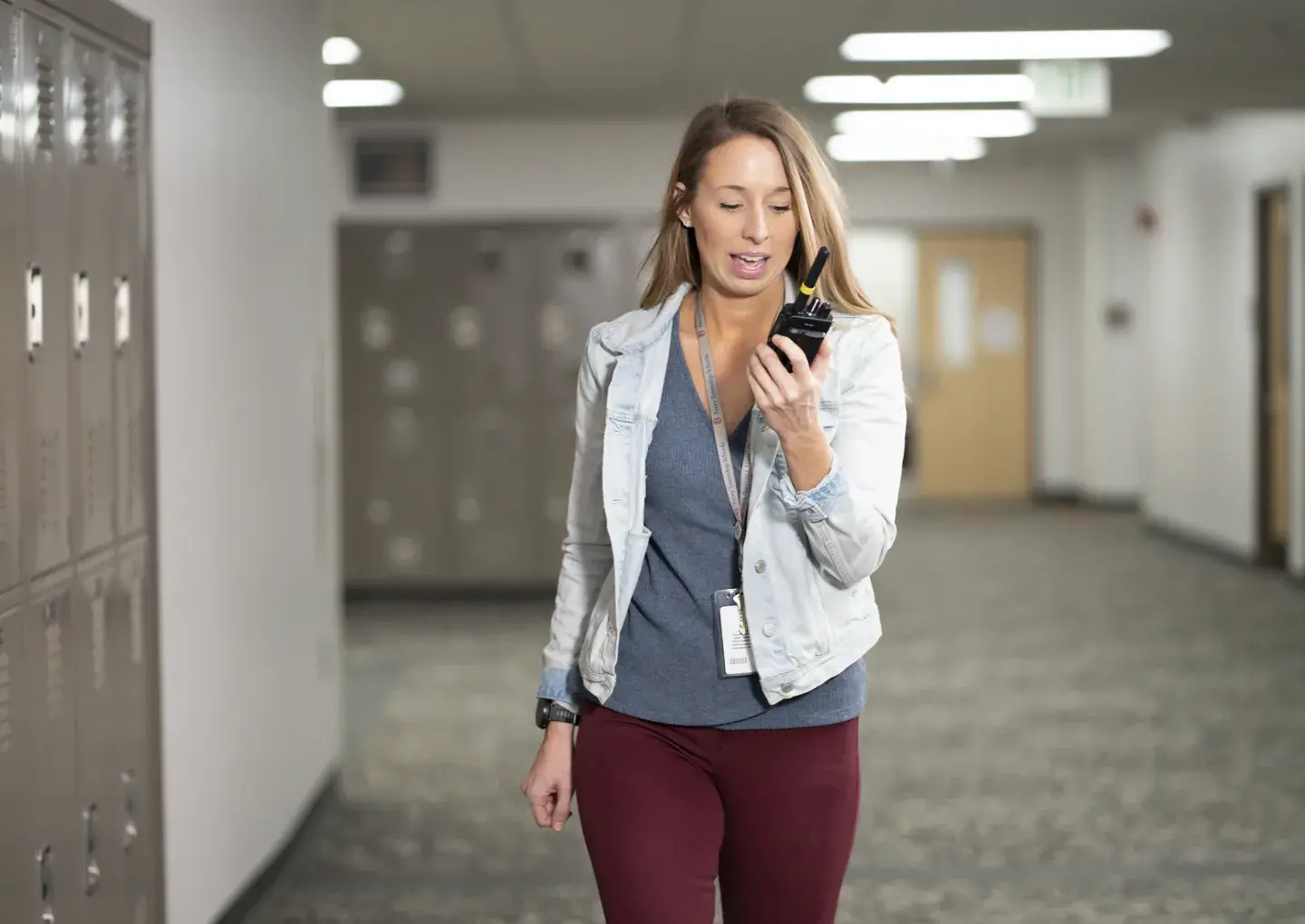
School staff are often assisting students, securing classrooms, directing evacuations, or administering first aid during an emergency. Using a handheld phone may not always be practical while performing these responsibilities.
Inconsistent building coverage
School buildings frequently contain reinforced concrete, steel, mechanical rooms, stairwells, and lower levels that can affect cellular reception. Coverage may also vary across large campuses or between multiple buildings, creating communication gaps in locations where reliable communication is essential.
These considerations do not diminish the importance of cell phones. They highlight why many school districts include additional communication technologies as part of their emergency preparedness plans. Digital two-way radio systems are specifically designed to provide instant, campus-wide communications that support coordinated response when every second matters.
Cell phone limitations at a glance
| Communication consideration | Why it matters during a school emergency |
|---|---|
| Network congestion and speed of communication | Messages and calls may be delayed during high network demand |
| One-to-one communication | Sharing updates with multiple teams takes additional time |
| Hands occupied | Staff may be assisting students or managing an incident |
| Building coverage | Signal strength can vary throughout large or reinforced facilities |
View school safety two-way radio solutions
How do digital radio systems improve school safety?
Digital two-way radio systems are designed to provide reliable, real-time communication across an entire school campus. Beyond enabling instant voice communication, today's systems include features that help staff respond more efficiently, share information with the right people, and maintain communication throughout an incident.
Campus-wide coverage
Reliable coverage is one of the most important considerations when designing a school radio system. Large campuses, reinforced construction, lower levels, and multiple buildings can create communication challenges that require careful planning and engineering.
Modern digital radio systems are designed around a school's unique layout to provide consistent coverage where staff work and respond.
Emergency button
Many digital radios include a dedicated emergency button that can instantly alert designated personnel when immediate assistance is needed. Depending on system configuration, the alert can identify the individual radio, prioritize emergency traffic, and notify administrators or security personnel so they can respond quickly.
This feature gives teachers, administrators, and other authorized staff a simple way to request help without navigating a phone or mobile application.
Talk groups
Talk groups allow schools to organize communications based on roles, locations, or responsibilities. Instead of every user hearing every transmission, staff can communicate within designated groups such as:
- Administrators
- Maintenance
- Transportation
- Athletics
- Security
- Teachers
- Bus drivers
- And others
Schools can also create district-wide or campus-wide talk groups that bring multiple teams together when broader coordination is required.
Interoperability with first responders
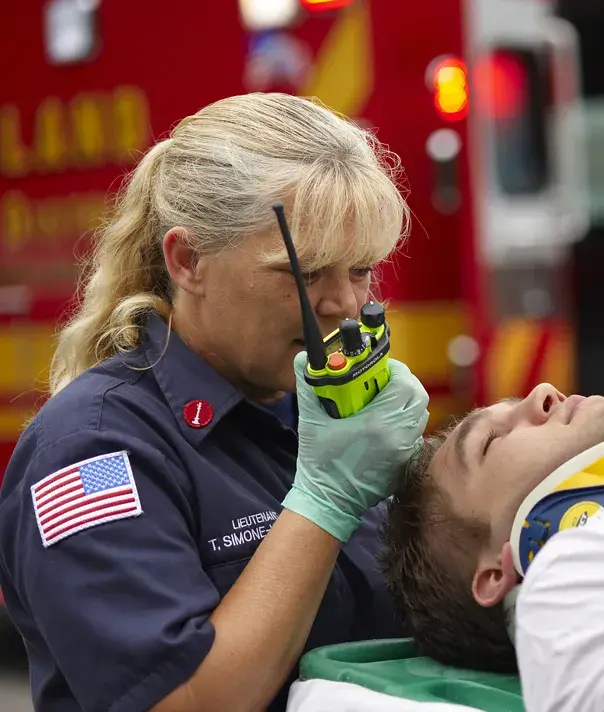
Communication becomes even more effective when schools and public safety agencies can share information directly. Many digital radio systems can be configured to support interoperability with local law enforcement, fire departments, and emergency medical services, helping improve coordination during critical incidents.
As one project leader noted during a school district radio upgrade: "One thing that was very important was having the ability to integrate local law enforcement and first responders into the school in the event of an emergency."
Integration with school security system
Modern digital two-way radio systems can integrate with a variety of school safety technologies, helping staff receive and share critical information more efficiently during daily operations and emergency situations.
Common integrations include:
- Video security: Display live camera feeds or associate radio activity with nearby cameras to provide additional context during an incident
- Access control: Trigger notifications when secured doors are accessed or locked down, helping staff stay informed as events unfold
- Smart sensors: Be alerted to suspicious activity, such as smoking or vaping in restrooms.
- Concealed weapon detection: Receive alerts when a potential concealed weapon is detected near entryways or other monitored areas.
- Mass notification: Coordinate radio communications with emergency alerts sent to staff, students, and parents
- Emergency management platforms: Share information across communication and security systems to support a more coordinated response
- License Plate Recognition (LPR - formally ALPR): Receive alerts for unauthorized access in parking lots, pick-up and drop-off areas, and maintenance roads
Explore unified education technology solutions
Improved voice clarity
Digital radio technology delivers clear, consistent audio across the coverage area, making it easier for staff to understand critical instructions. Features such as digital noise reduction and audio processing help improve intelligibility in busy hallways, outdoor events, and other challenging environments.
Clear communication helps reduce misunderstandings and allows school personnel to focus on managing the situation rather than repeating messages.
Together, these capabilities make digital two-way radios much more than a voice communication tool. They provide schools with a dependable communication platform that supports daily operations, emergency preparedness, and coordinated response across the entire campus.
Which school staff should be assigned a school two-way radio?
The staff members who carry two-way radios should reflect your school's size, layout, and emergency operations plan. While every district has different needs, radios are typically assigned to personnel responsible for campus operations, student safety, and emergency response, including the following.
Administrators
Superintendents, principals, assistant principals, and other district leaders often coordinate incident response and communicate with staff across multiple buildings. A radio provides immediate access to key personnel without relying on phone calls or text messages.
Custodians and facilities staff
Custodians and maintenance personnel are frequently the first to identify facility issues such as power outages, water leaks, mechanical failures, or security concerns. During an emergency, they can also assist with building access, utility controls, and campus operations.
Bus and transportation staff
Bus drivers, transportation supervisors, and vehicle maintenance teams often operate away from school buildings while remaining responsible for student safety. Two-way radios help transportation personnel communicate with schools and district leadership during route changes, severe weather, accidents, or other unexpected events.
School resource officers and security personnel
School resource officers (SROs) and campus security personnel rely on immediate communication to coordinate with administrators, monitor campus activity, and respond to incidents. Radio interoperability can also support communication with local law enforcement and first responders when needed.
Athletic directors and event staff
School activities extend beyond the classroom. Athletic directors, coaches, and event personnel often oversee large groups of students, spectators, and visitors across gyms, stadiums, parking lots, and outdoor facilities. Radios help staff coordinate events, respond to medical situations, and manage crowd safety.
School nurses
School nurses regularly communicate with administrators and other staff regarding student medical needs. During emergencies, a radio provides a direct communication link that allows nurses to coordinate care, request assistance, and receive timely updates without leaving their work area.
School role-specific radio assignment overview
| Staff role | Why a radio is valuable |
|---|---|
| Administrators | Coordinate campus-wide response |
| Principals | Direct building operations |
| Custodians | Report facility and security issues |
| Bus and transportation | Communicate during routes and emergencies |
| School resource officers | Coordinate security and emergency response |
| Athletic directors | Manage events and outdoor activities |
| School nurses | Communicate during medical incidents |
Develop a communication plan before assigning radios
Providing radios to staff is only one part of an effective communication strategy. Schools should also establish clear communication protocols that define who carries a radio, which talk groups they use, when emergency channels should be activated, and how communication procedures align with the district's emergency operations plan. Regular training and practice help ensure staff can communicate confidently during both everyday operations and emergency situations.
RELATED: How radios help save lives during a school shooting
Questions to ask before purchasing a school radio system
Selecting a school radio system is a long-term investment in campus communication and safety. Beyond the radios themselves, it's important to evaluate how the system will perform across your campus, support daily operations, and adapt to future needs.
As you evaluate solutions, consider asking these questions:
Will the system provide reliable coverage throughout our campus?
Every school is different. Multiple buildings, reinforced construction, athletic facilities, parking lots, and outdoor spaces can all affect radio performance. Ask whether the system will be engineered and tested in your environment to provide reliable coverage where staff work every day.
Can the system grow with our district?
Your communication needs may change over time. Consider whether the system can support additional schools, buildings, users, or new technologies without requiring a complete replacement.
Does it support interoperability with first responders?
Ask how the radio system can communicate with local law enforcement, fire departments, and emergency medical services during critical incidents. Coordinated communication can help improve response and information sharing when multiple agencies are involved.
What safety features are included?
Modern digital radio systems often include capabilities such as:
- Emergency alert buttons
- Role-based talk groups
- GPS location services
- Priority communications
- And more
Understanding which features are available can help your district align technology with its emergency operations plan.
What training, service, and support are available?
A reliable communication system depends on more than quality equipment. Ask about system design, installation, user training, preventative maintenance, software updates, repeaters, and local technical support. Ongoing service helps ensure your investment continues to perform as your district's needs evolve.
Get instant recommendations: Find my two-way radio
Why partner with an experienced school communications provider?
Every school district has unique communication challenges. The right solution begins with understanding your buildings, operational needs, and emergency response procedures before recommending technology.
BAYCOM has partnered with K-12 schools to design, deploy, and support digital radio systems that improve communication during both everyday operations and emergencies. From coverage assessments and system engineering to installation, training, and long-term support, our team works alongside school leaders to build communication solutions that meet today's needs and prepare for tomorrow's challenges.
Ready to evaluate your school's communication system? Contact a BAYCOM expert to schedule a consultation and discuss a digital radio solution designed for your campus or district. Prefer to explore on your own? Use our Find my two-way radio tool to get recommendations.
Frequently asked questions: School two-way radios
Why do schools use two-way radios instead of cell phones?
Schools use two-way radios because they provide reliable, instant group communication without dialing numbers or waiting for recipients to answer. Radios also support campus-wide coordination, role-based talk groups, and dedicated emergency features that help staff communicate quickly during both routine operations and emergency situations.
What are the benefits of digital two-way radios in schools?
Digital two-way radios provide reliable campus communications, improved voice clarity, emergency alert capabilities, talk groups, and interoperability with first responders. They also support day-to-day school operations by helping administrators, teachers, facilities staff, and security personnel stay connected throughout the campus.
Who should carry a two-way radio at school?
Two-way radios are commonly assigned to administrators, principals, school resource officers, security personnel, custodians, transportation staff, athletic directors, and school nurses. Each district should determine radio assignments based on its campus layout, staffing, and emergency operations plan.
Can school two-way radios communicate with police and first responders?
Yes, many digital radio systems can be configured to support interoperability with local law enforcement, fire departments, and emergency medical services. This capability allows authorized users to communicate more effectively during emergencies and helps improve coordination between schools and public safety agencies.
What should schools consider when choosing a two-way radio system?
Schools should evaluate campus-wide coverage, interoperability, emergency features, system scalability, ease of use, and ongoing service and support. A communication system should also align with the district's emergency operations plan and provide reliable performance across all school buildings and outdoor areas.
How many two-way radios does a school need?
It depends. Quantity is determined based on campus size, staffing, and emergency procedures. BAYCOM will assess your needs and your campus footprint to provide tailored recommendations.