What a School Shooting Reveals about School Communication, Security, and Response
I still remember that sinking feeling when I heard about a school shooting in Colorado several years ago, along with other more recent incidents. I wish I had answers for how to prevent them.
I don’t.
But I do feel great pride knowing the technology systems we help design can play a role in saving lives in these horrific situations. In moments of crisis, the value of reliable communication and security protocols becomes undeniable. This article examines how direct radio communication and integrated security technology can improve emergency response in K-12 schools.
Sheriff credits direct two-way radio communication for faster school emergency response
In Douglas County, Colorado, Sheriff Tony Spurlock told NBC News that a May 7, 2019 shooting on the STEM School Highlands Ranch campus could have been much worse had it not been for a direct radio link between the school and police.
“They have one of our radios and they have communication directly to a dispatch center, and they immediately notified us that there was an active shooter in the school,” said Sheriff Spurlock. “That went over all of our comms so everyone was able to hear it immediately. That saves minutes to notify people.”
It took police less than two minutes to arrive after reports of gunfire, and they immediately took one of the attackers into custody. The speed of the response was due in large part to the direct radio link.
“I believe those things made a huge difference in saving lives,” Spurlock said.
View Education Security Solutions
Some schools have only one method for contacting police, with a local phone call to 9-1-1. However, once responders are en route or arrive at the school, there is no clear line of communication for them to quickly assess the situation and find the exact location of the incident on campus. Without direct-link two-way radios and other school security solutions, teachers can feel ill-equipped to respond appropriately in a crisis situation.
How do direct-link two-way radios work?
Direct-link two-way radios work by giving schools a dedicated, real-time communication channel directly into public safety radio systems.
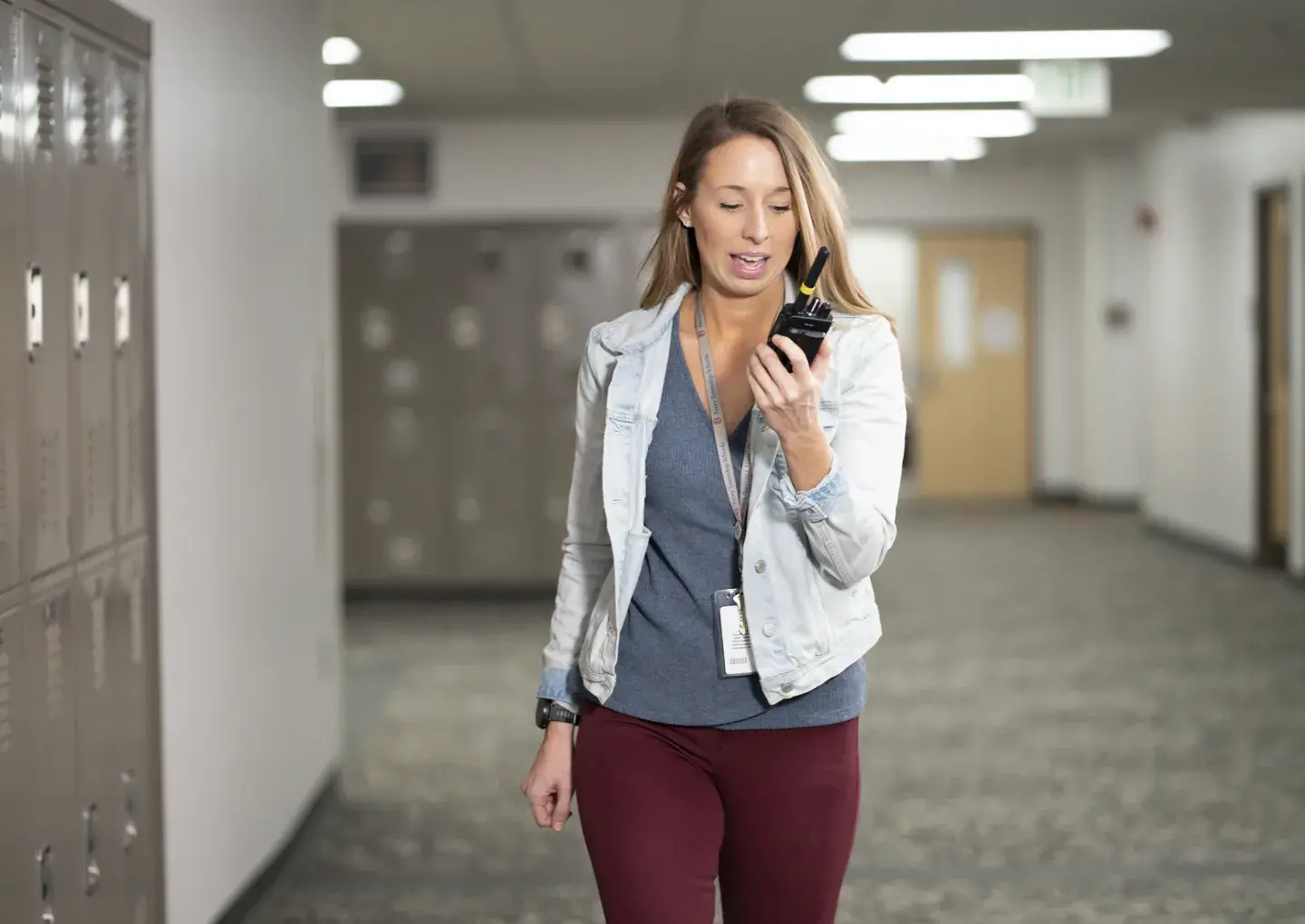
School staff can communicate instantly with police dispatch and responding officers over the same radio network they use. When an emergency occurs, pressing the radio’s emergency button broadcasts the alert and voice message simultaneously to dispatchers and multiple responders. Everyone hears the same information at the same time, without delays, call transfers, or lost details.
Because this communication happens in real time and does not depend on cellular networks, it allows first responders to understand the situation immediately, coordinate faster, and arrive on scene with better awareness of where and what the threat is.
How confident are teachers in their emergency preparedness?
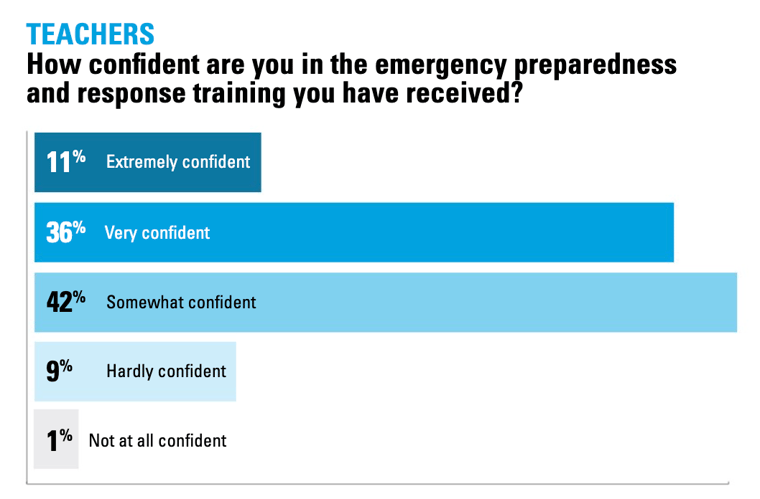
Even with more investments in school security systems, Motorola Solutions’ most recent school safety survey report indicates teachers aren’t necessarily as confident as they could be, with only 47% saying they’re either extremely or very confident in their security training. That leaves more than half of teachers questioning their emergency preparedness and response training. This confidence gap highlights the need for reliable, easy-to-use communication and safety tools that support staff during high-stress emergencies.
An ecosystem of security technology speeds emergency response
Two-way radios with quick access to emergency response teams are baseline security tools for modern educational environments, but schools benefit most when communication, security, and alerting systems work together.
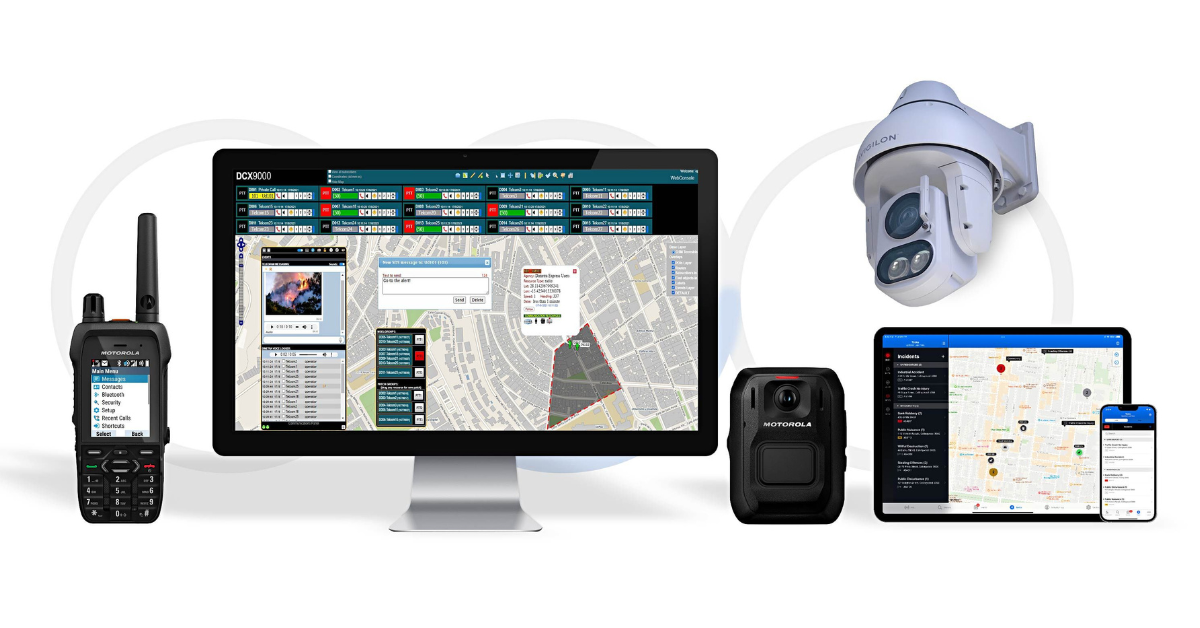
In recent years, technologies beyond two-way radios have been implemented in many schools to further enhance safety. Our partners at Motorola have developed innovative solutions for faster, more efficient communications, threat detection, and rapid response so school personnel can seamlessly connect to first responders and other educators before, during, and after an emergency.
Motorola Solutions teamed up with SchoolSAFE to develop an ecosystem of technologies to enhance safety so students, teachers, and parents not only feel safer, but are safer.
Two-way radios
Web-enabled two-way radio-based solutions connect school radio systems and public safety radio systems during an emergency, allowing emergency responders and school principals, administrators, security staff, or others at the school to talk directly in real time.
Video surveillance
State-of-the-art digital security cameras give schools clearer campus visibility with high-resolution video, simple installation, and AI-powered monitoring. Integrated with smart alert systems, video security supports faster emergency response and safer learning environments.
Access control
Secure every school entry point with an access control solution that integrates with existing systems, whether on-premise or in the cloud. Smart readers, wireless locks, and touchless credentials help protect students and staff, while rapid lockdown capabilities prevent unauthorized access.
License plate recognition
License plate recognition (LPR) solutions help schools identify vehicles entering campus, improving visibility. Integrated with broader school security systems, LPR supports proactive monitoring and enables rapid, area-wide alerts to quickly identify and apprehend potential threats.
Panic alarms
With the push of a button, schools can instantly contact 9-1-1 while alerting staff on campus to an incident, enabling faster and more coordinated emergency response. Several states have passed legislation that requires K-12 schools to have panic alarm systems in place to enable first responders to get information faster and respond more quickly.
Mass notifications
Keep parents informed in any situation with automated mass notifications and alerts delivered across multiple devices and applications.
While the benefits of an integrated school security system are clear, we know it can be a challenge for school districts to fund safety initiatives. That’s why our team at BAYCOM constantly monitors available grants and other funding mechanisms—from Motorola and other sources—so schools can take advantage of every opportunity to create safer environments.
Contact BAYCOM to explore how two-way radio communication and supporting security solutions can enhance safety and improve emergency response times at your school facility.
School Security System FAQs
Why are two-way radios important for school emergency response?
Two-way radios provide direct, real-time communication between schools and first responders, reducing response times and improving situational awareness during emergencies.
How does direct radio communication differ from calling 9-1-1?
Unlike a phone call, direct radio access allows school staff and multiple responders to hear and share critical information simultaneously, saving valuable minutes.
What security technologies work best alongside school radio systems?
Video surveillance, access control, panic alarms, license plate recognition, and mass notification systems work together to support faster, more coordinated response.
Can schools fund integrated security and communication systems?
Yes. Many schools use grants and funding programs to help offset the cost of safety and emergency communication technology. BAYCOM assists in identifying grant opportunities.