Updated October 2026
License plate recognition (LPR) technology can help colleges and universities improve parking enforcement, better understand parking utilization, reduce permit fraud, and enhance campus security.
As an example, UW-La Crosse administrators thought there was a problem with parking lot capacity. However, LPR technology provided data that challenged assumptions about parking capacity while helping the university improve operations and generate additional revenue.
Learn what LPR technology does and how it can improve parking issues at your campus facility.
View LPR solutions
What is LPR technology?
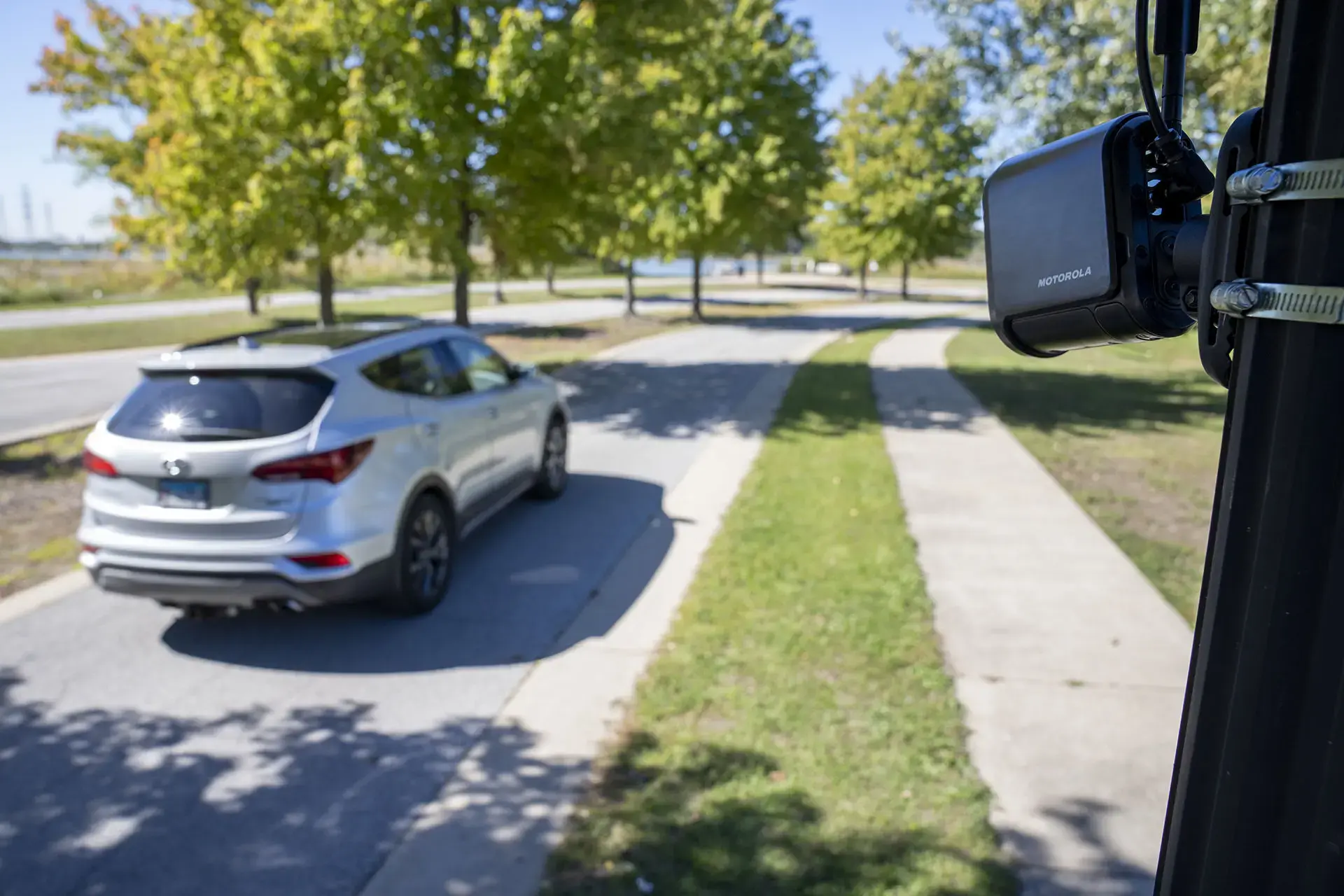
LPR stands for License Plate Recognition and is a technology that uses specialized cameras and software to automatically capture, read, and record vehicle license plate information.
The system captures an image of a vehicle’s plate, converts the characters into searchable data, and associates that information with details such as the date, time, and location of the capture.
LEARN MORE → How does LPR technology work?
What are the benefits of LPR for campus parking?
For UW-La Crosse, implementing LPR technology provided more than a clearer picture of parking availability. The data and automation provided by the system have delivered measurable improvements across the university’s parking and campus operations.
Generate revenue
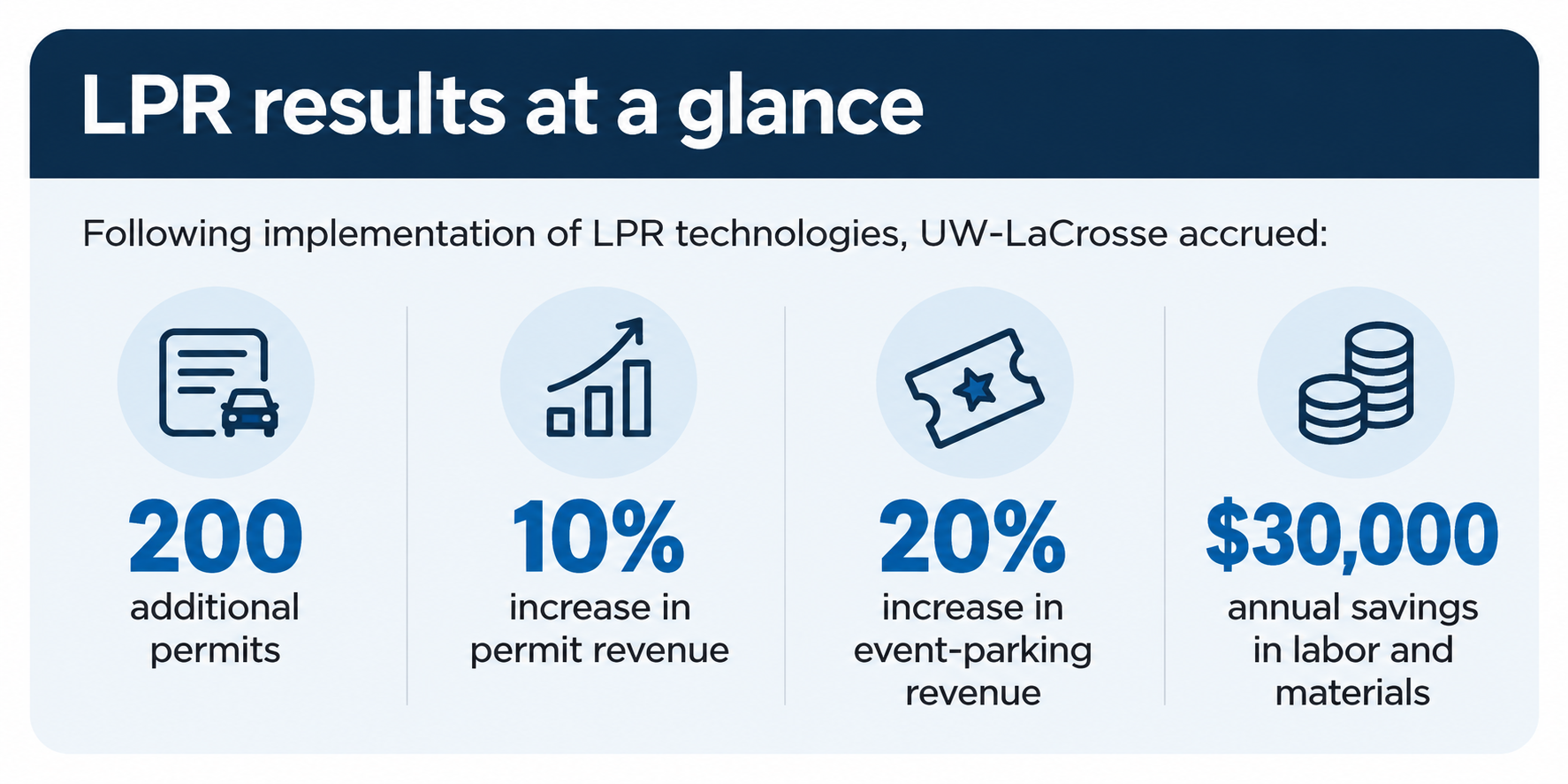
Because the university knows exactly how many parking spaces are available, it’s actually able to sell more parking permits. Shortly after deploying the system, UW-LaCrosse issued 200 additional permits and increased permit revenue by 10% year over year. Event-parking revenue also increased by 20%.
Combat fraud
Instead of issuing paper permits, students and staff now buy parking permits online based on their license plate number. This ‘pay by plate’ functionality minimizes the risk that permits will be shared between multiple people or vehicles. Plus, it eliminates the time and effort required to print, issue, and check on paper permits, which saved the university $30,000 a year in labor and materials.
Enhance security
If a known individual is banned from campus and a license plate can be associated with that person, the system can send an immediate alert if that car drives by a camera or parking truck equipped with a LPR scanner, allowing for security personnel to be dispatched immediately.
Provide critical information or evidence
If an incident does happen on or near campus, the LPR technology can help lead to the capture or conviction of a criminal. For example, if a witness got a partial license plate number following an incident, the system can be queried to show all plates that include those letters or numbers, and indicate the time and location of all matching vehicles.
What should organizations consider when implementing LPR?
Organizations considering LPR technology should look beyond the cameras themselves and consider how the entire system will fit into their existing operations. That includes determining where and how LPR will be used, how data will be stored and managed, who will have access to it, and how long it will be retained.
Organizations should also consider system accuracy, cybersecurity, integrations with existing parking and security systems, and applicable privacy requirements or policies. Working with an experienced technology partner can help ensure the solution is designed as part of a security ecosystem around the organization’s specific operational needs, infrastructure, and long-term goals.
“People were complaining about the lack of parking spaces, but the university had no real way to accurately track day-to-day availability,” said a BAYCOM communications consultant. “So they installed license plate recognition (LPR) technology in two of their mobile parking vehicles to get a better sense of what was happening, and what they found was surprising. There are actually plenty of parking spaces available; it’s just that people apparently don’t like parking away from buildings.”
Choosing an LPR solution for campus parking
An effective campus LPR solution should do more than capture license plates. It should fit into the university’s broader parking and security operations, provide parking staff with reliable and actionable information, and be scalable as needs change.
BAYCOM works with organizations to design and support LPR solutions based on their specific environment and operational requirements. By considering factors such as coverage, existing infrastructure, system integrations, data management, and ongoing support, BAYCOM helps customers implement purpose-built solutions designed to deliver long-term value.
Contact BAYCOM to talk through your parking security needs and build a workable solution that integrates seamlessly within your processes and technologies.
Frequently asked questions about LPR for campus parking
Can LPR technology work with existing parking and security systems?
Yes, depending on the technologies involved, LPR can integrate with existing parking, video security, access control, and other security systems. Evaluating these integrations early can help a college or university create a more connected security ecosystem while making use of its existing technology investments.
Can LPR cameras be installed on parking enforcement vehicles?
Yes. Mobile LPR systems can be installed on parking enforcement or security vehicles to capture license plates as personnel drive through campus parking areas. Fixed LPR cameras can also be deployed at entrances, exits, or other strategic locations, depending on the application and campus environment.
Does LPR eliminate the need for physical parking permits?
LPR can support pay-by-plate parking, which uses a vehicle’s license plate as its identifier instead of a physical permit, hangtag, or sticker. Whether a campus can completely eliminate physical permits depends on its parking policies, existing systems, and how its LPR solution is implemented.
How is license plate data stored and managed?
Data storage and management vary by LPR solution. When evaluating a system, organizations should understand where license plate data is stored, how long it is retained, who can access it, and what cybersecurity and access controls are in place to protect it.
Can an LPR system grow as campus needs change?
Yes. A well-designed LPR system should account for future needs, such as additional parking areas, cameras, enforcement vehicles, users, or integrations with other technologies. Planning for scalability from the beginning can help colleges and universities expand their systems without having to start over as their parking and security needs evolve.