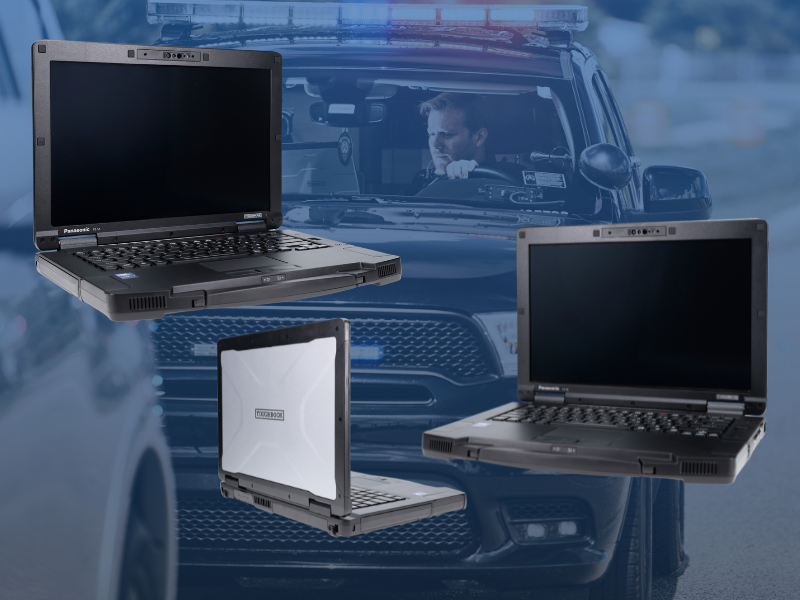
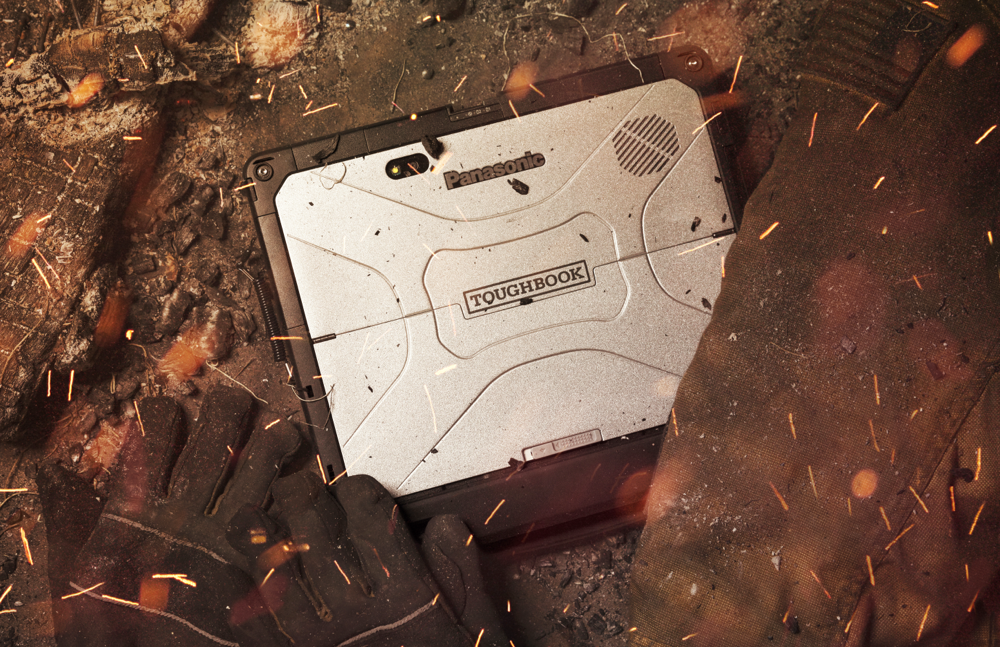
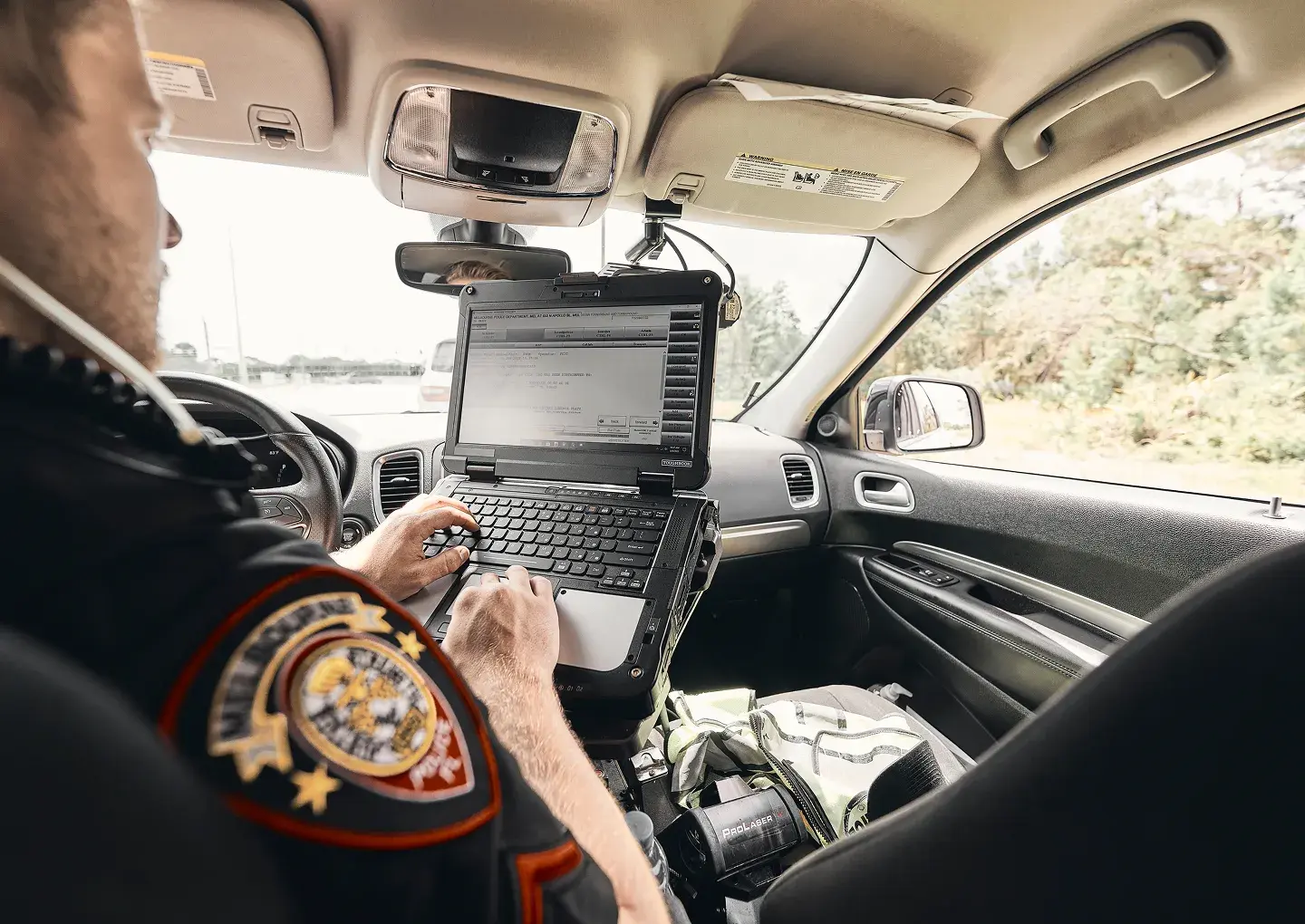
Executive Summary: Understand how to choose between the TOUGHBOOK 40, TOUGHBOOK 34, or TOUGHBOOK 56 based on industry, environment, design, battery life, total cost of ownership, and other factors.
When your work happens in the field and not behind a desk, your technology can’t afford to fail.
From first responders and utility crews to manufacturers and school safety teams, the environments your teams operate in are unpredictable, fast-moving, and often unforgiving. Standard laptops weren’t built for that. Panasonic TOUGHBOOK was.
But with multiple models, configurations, and use cases, you likely have one question:
Which TOUGHBOOK is right for my team?
The right Panasonic TOUGHBOOK depends on your work environment, mobility requirements, and how the device will be used. This article provides a guide on how to choose between the fully rugged TOUGHBOOK 40, the detachable TOUGHBOOK 34, and the semi-rugged TOUGHBOOK 56.
What makes a TOUGHBOOK different?
These aren’t just “durable laptops.” Panasonic TOUGHBOOK devices are purpose-built for mission-critical environments where failure isn’t an option.
They’re designed to:
- Withstand drops, vibration, dust, and extreme temperatures
- Perform reliably in vehicles, outdoors, and industrial settings
- Stay connected with advanced wireless, GPS, and public safety integrations
- Adapt to your workflow with modular designs and vehicle docking
At BAYCOM, we’ve seen it firsthand: the right device doesn’t just survive the environment—it improves how your team works within it.
Where to begin: Evaluate the industry and environment
The fastest way to narrow your options is to look at where the device will be used.
In-Vehicle / Public Safety
If your team operates out of a vehicle—law enforcement, fire, EMS, or field supervisors—you need:
- Strong vehicle mounting compatibility
- Sunlight-readable displays
- Reliable connectivity on the move
Best fit: TOUGHBOOK 40 or TOUGHBOOK 34
These models are designed for vehicle integration and real-time communication in high-pressure situations.
Field Service & Utilities
For technicians working outdoors, climbing, inspecting, or moving constantly:
- Portability and battery life matter most
- Devices must handle weather, drops, and rough handling
Best fit: TOUGHBOOK 56 or TOUGHBOOK 34 (2-in-1)
The TOUGHBOOK 56 delivers the ideal balance of performance, durability, and portability, making it a strong choice for teams that need a reliable laptop in the field without the bulk of a fully rugged device.
Manufacturing & Industrial Environments
Plant floors introduce vibration, dust, and constant movement:
- Devices need to withstand tough conditions
- Connectivity to systems, cameras, and data platforms is key
Best fit: TOUGHBOOK 56 or TOUGHBOOK 40
The TOUGHBOOK 56 is well-suited for industrial environments where teams need durability with flexibility. The TOUGHBOOK 40 is suitable for more extreme conditions.
Education & Campus Safety
For IT teams, facilities, and campus safety, the devices must be:
- Durable but adaptable
- Used across security, operations, and administration
Best fit: TOUGHBOOK 34 or TOUGHBOOK 56
Versatile enough to move between environments while maintaining performance and reliability.
Product spotlight: TOUGHBOOK 56
If your team needs a traditional laptop that is built for the realities of the field, the Panasonic TOUGHBOOK 56 is one of the most versatile options available.
It’s designed for organizations that need:
 1) A familiar laptop design
2) Reliable performance in unpredictable environments
3) A balance of durability, portability, and cost-efficiency
For many industries, the TOUGHBOOK 56 is the practical starting point. It’s rugged enough to handle the job, without overcomplicating the solution.
5 key factors to consider when choosing a TOUGHBOOK
Once you’ve narrowed by environment, these factors help finalize your decision:
1. Level of Ruggedness
Not every environment requires the same level of protection.
- Fully rugged (TOUGHBOOK 40, 34): Extreme conditions, public safety, heavy field use
- Semi-rugged (TOUGHBOOK 56): Field service, utilities, manufacturing, and mixed environments
The TOUGHBOOK 56 hits the sweet spot for many organizations, delivering rugged performance without over-engineering for environments that don’t require it.
What is the difference between a fully rugged and semi-rugged TOUGHBOOK? A fully rugged TOUGHBOOK is engineered for more demanding environments, including exposure to weather, dust, vibration, and frequent handling. A semi-rugged TOUGHBOOK provides additional durability compared with conventional laptops while prioritizing portability and cost-efficiency for less extreme working conditions.
RELATED ARTICLE: Understanding Rugged Laptop Ratings
2. Form Factor: Laptop vs. 2-in-1
Determine how your team will use the devices.
- Traditional laptop (TOUGHBOOK 40, 56): Best for consistent workflows, industrial use, and field teams who prefer a standard interface
- 2-in-1 detachable (TOUGHBOOK 33): Ideal for teams moving between vehicle and field
Choosing the right form factor can significantly improve efficiency.
3. Connectivity & Integration
Your device shouldn’t operate in isolation. It should connect seamlessly with:
- Two-way radio systems
- Video security platforms
- Dispatch and reporting software
- GPS and real-time data tools
This is where BAYCOM stands apart. We help ensure your TOUGHBOOK works as part of a fully integrated communication and safety ecosystem.
4. Battery Life & Power Management
In the field, access to power isn’t guaranteed.
Look for:
- Hot-swappable batteries
- Extended battery options
- Vehicle charging compatibility
Downtime due to power loss goes beyond inconvenience and can negatively impact operations.
5. Total Cost of Ownership
Upfront cost is only part of the equation.
Consumer-grade laptops may seem cheaper. However, in rugged environments, they often lead to:
- Frequent replacements
- Increased downtime
- Higher repair costs
- Lost productivity
TOUGHBOOK devices are built to last, often delivering a lower total cost over time.
Choosing the right model: TOUGHBOOK quick comparison
|
Model |
Ruggedness |
Form Factor |
Best For |
|
TOUGHBOOK 40 |
Fully rugged |
Laptop |
Public safety, extreme environments |
|
TOUGHBOOK 34 |
Fully rugged |
Detachable 2-in-1 |
Mobile teams, field, and vehicle |
|
TOUGHBOOK 56 |
Semi-rugged |
Laptop |
Field service, utilities, industrial |
Considerations beyond the device
Choosing a TOUGHBOOK is only part of the decision.
How it’s configured, mounted, connected, and supported makes the difference between a device that works and a solution that transforms operations.
At BAYCOM, we go beyond the hardware. We:
- Evaluate your environment and workflows
- Configure and deploy devices to fit your needs
- Integrate TOUGHBOOK with your communication and security systems
- Test solutions inside our Lifeline Technology Center before they ever reach your team
Because in mission-critical environments, “it will work” isn’t a tagline. It’s a requirement.
Find the right TOUGHBOOK
If you’re evaluating rugged devices or planning a deployment, our team can help you choose the right model and build a solution around it.
Talk to a TOUGHBOOK specialist
Explore rugged mobility solutions