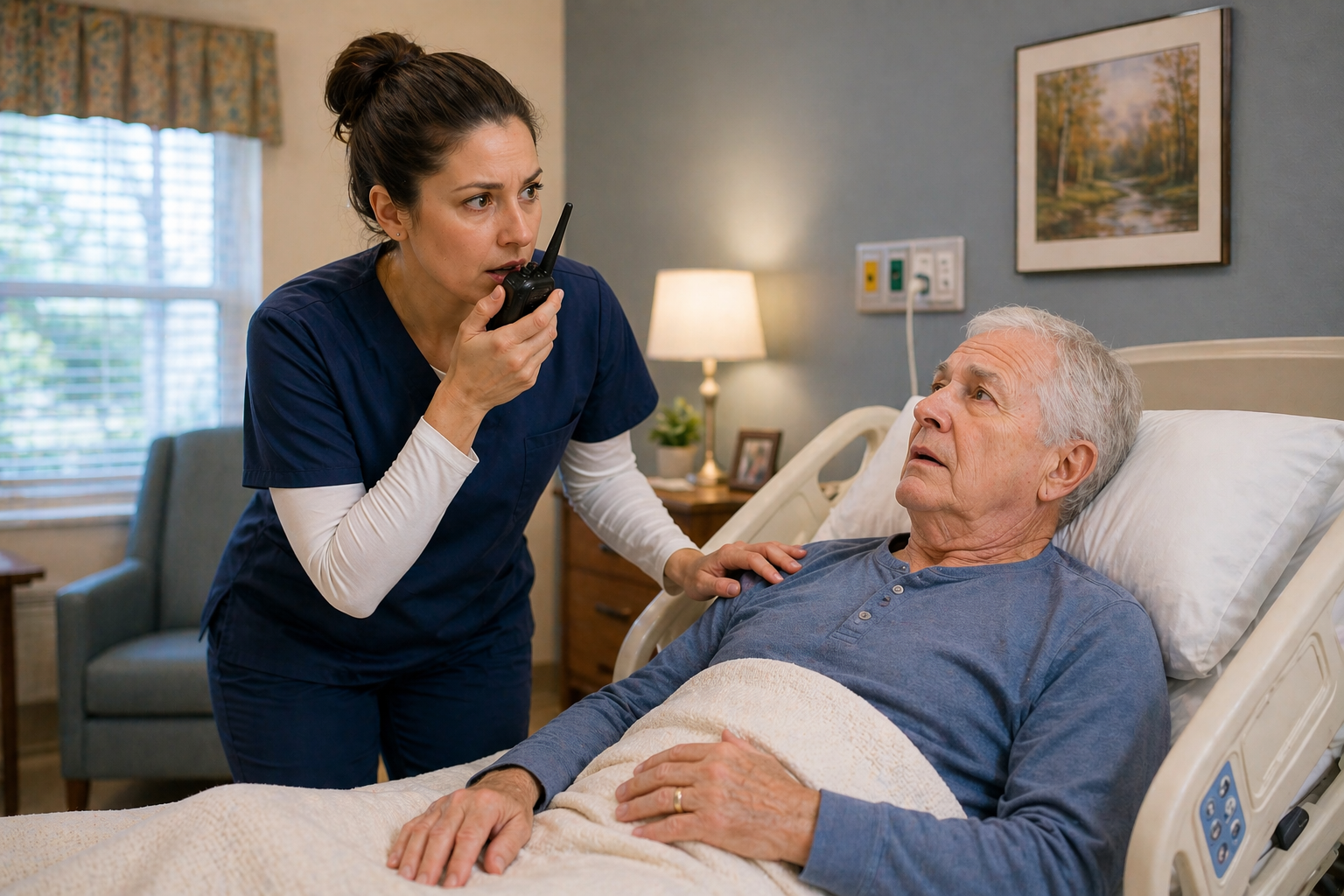
Every day, healthcare professionals dedicate themselves to caring for patients and supporting their communities. Yet while they work to keep others safe, they often face risks of their own.
Healthcare and social service workers experience serious workplace violence incidents at a rate more than five times higher than workers in private industry overall.1
In these moments, clear, reliable communication can make all the difference. Yet many regional healthcare facilities span over a wide geographic area and have aging or disconnected systems, resulting in communication gaps and inconsistent coverage.
Modern digital two-way radio systems help hospitals maintain dependable, campus-wide and region-wide communication, keeping clinical, security, facilities, and support teams connected. In this article, we explore the importance of reliable communication and how radios work alongside technologies like video security and access control to improve coordination and response across the entire health system.
Article at a glance:
- Why does hospital communication become more difficult as health systems expand?
- How do modern digital radio systems address communication challenges?
- Radios are the backbone of a connected safety ecosystem
- Real-world use case: Regional healthcare system
- Questions to ask before upgrading hospital communications
- How to build a communication system that grows with your health system
Why does hospital communication become more difficult as health systems expand?
As healthcare organizations grow, so do the communication challenges. Expanding from a single hospital to a regional health system introduces more buildings, more teams, and more environments that require reliable, uninterrupted communication.
Common challenges include:
- Multiple campuses: Staff need to communicate seamlessly across hospitals, medical office buildings, and administrative facilities, even when they're miles apart.
- Remote clinics and outpatient locations: Satellite facilities often operate independently but still need to stay connected with the larger health system for coordinated patient care, security, and daily operations.
- Parking structures and exterior spaces: Security officers, facilities teams, and emergency responders need dependable coverage in parking ramps, loading docks, helipads, and other outdoor areas where communication remains critical.
- Basements, tunnels, and mechanical rooms: Areas below ground or surrounded by concrete and steel can create coverage challenges if a communication system isn't designed to support them.
- Aging analog infrastructure: Legacy radio systems may no longer provide the coverage, capacity, or interoperability needed to support today's healthcare environments, making it more difficult to keep teams connected as organizations grow.
- Complex healthcare environments: Hospitals are filled with medical equipment, reinforced construction, and continually changing spaces that can affect radio coverage. Proper system design and coverage testing help ensure reliable communication throughout the facility.
As these environments become more complex, communication infrastructure must be designed to scale with the health system, providing reliable coverage wherever staff need to respond, collaborate, and keep operations moving.
How do modern digital radio systems address communication challenges?
Modern digital two-way radio systems are designed to support the complex communication needs of today's healthcare organizations. Unlike legacy systems, they provide reliable coverage, clear audio, and the flexibility to connect staff across multiple facilities, helping health systems improve coordination without adding unnecessary complexity.
Modern digital radio systems help healthcare organizations:
- Extend communication across campuses: Staff can communicate seamlessly across hospitals, medical office buildings, parking structures, and other areas where reliable communication is essential.
- Connect regional facilities: Multiple hospitals, outpatient clinics, and administrative buildings can be linked through a single communication network, helping teams collaborate across an entire health system.
- Improve emergency response: Instant push-to-talk communication enables faster coordination between clinical staff, security, facilities, and emergency response teams when every second matters.
- Support department interoperability: Security, facilities, environmental services, clinical engineering, patient transport, and other departments can communicate on a shared platform while maintaining the appropriate level of access and control.
- Enable public safety interoperability: A radio system can be designed to provide communication pathways between hospital personnel and local law enforcement, fire, and EMS during emergencies, improving coordination when a unified response is needed.
- Provide location awareness: GPS-enabled radios can help locate security personnel, maintenance teams, or other mobile staff, improving situational awareness and dispatch efficiency across large campuses.
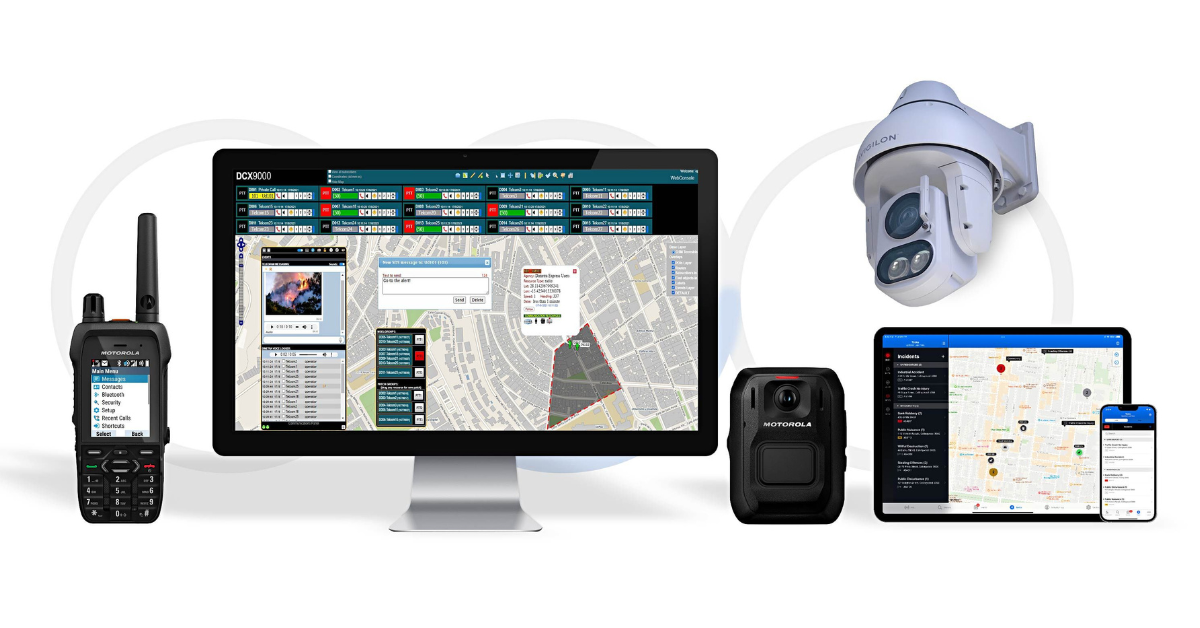
- Integrate with connected safety technologies: Modern radio systems can integrate with video security, access control, body-worn cameras, and automated alerts, creating a more connected approach to communication and incident response.
As healthcare systems continue to expand, modern digital radio systems provide the reliable communications foundation needed to support both everyday operations and coordinated emergency response across every facility.
Watch how a healthcare communication ecosystem works:
Radios play a central role in a connected safety ecosystem
Reliable communication is essential, but today's hospitals require more than stand-alone radio systems. Modern healthcare organizations are increasingly connecting communication, security, and incident response technologies to improve situational awareness and help teams respond faster.
Digital two-way radios often serve as the communications backbone of this connected ecosystem, integrating with technologies that provide greater visibility and coordination across the health system, including:
- Integrated video security: Security personnel can verify incidents in real time using live camera feeds, helping them assess situations before arriving on scene.
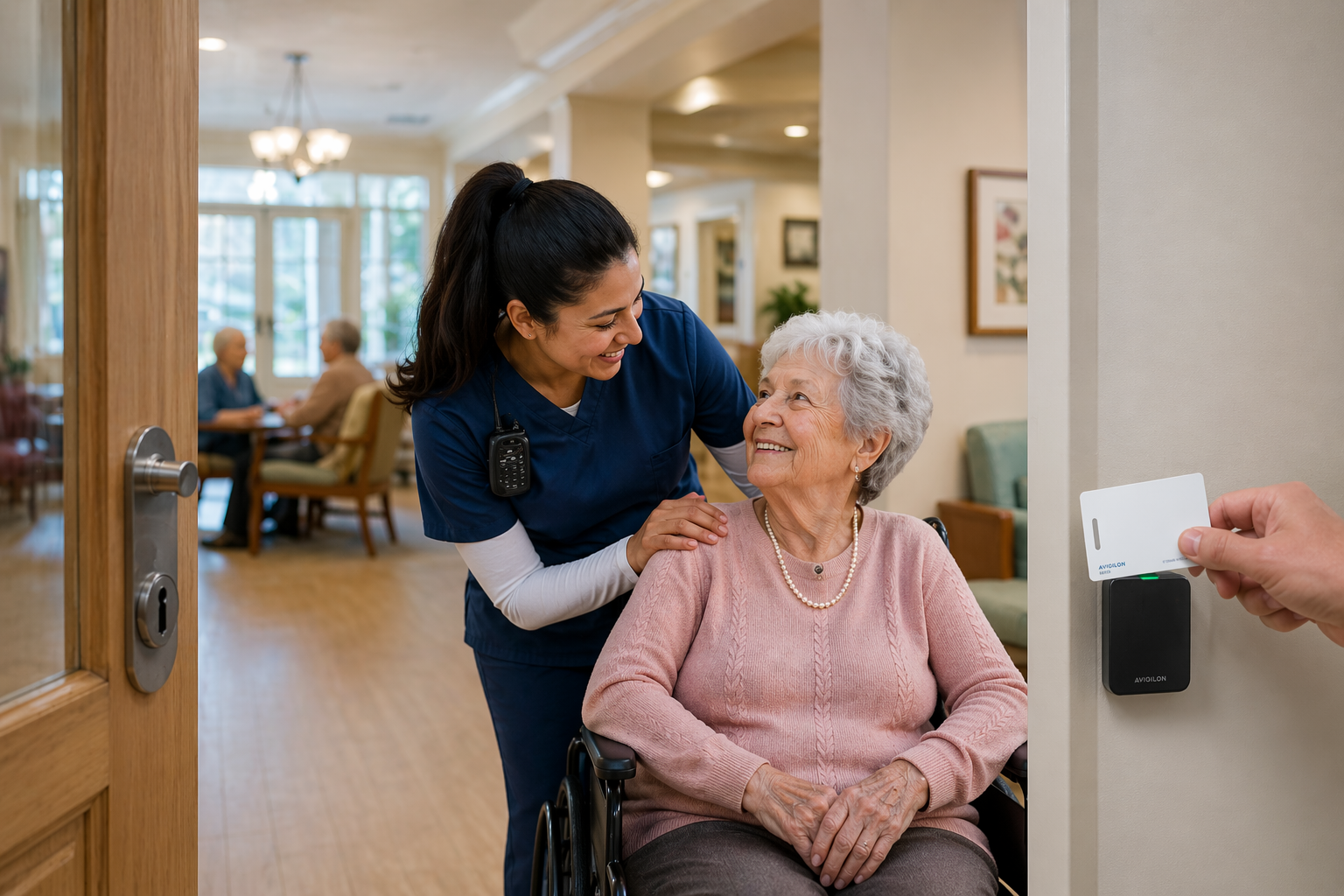
- Access control: Connected access control systems can help secure sensitive areas, manage lockdown procedures, and support a coordinated response during emergencies.
- Body-worn cameras: Security teams can capture interactions and incidents while maintaining direct communication with dispatch and other responders.
- Automated alerts: Critical events, such as emergency calls, panic alarms, or security incidents, can automatically notify the appropriate personnel, reducing response times.
- Unified response workflows: Connecting communication and security technologies gives clinical, facilities, and security teams a shared operational picture, enabling faster decisions and more coordinated responses across multiple hospitals and care locations.
When communication systems are designed as part of a connected ecosystem instead of independent technologies, healthcare organizations are better equipped to protect staff, patients, and visitors while supporting day-to-day operations across every facility.
Real-world use case: Multi-campus hospital communication system
Challenge:
SSM Health's security teams lacked seamless communication and situational awareness across multiple sites, relying on outdated systems that slowed incident response times and coordination.
Solution:
SSM Health implemented the Safe Hospitals technology ecosystem, integrating MOTOTRBO radios, Avigilon cameras, and Ally incident management to enable unified, real-time collaboration and visibility.
Results:
The integrated solution helped SSM Health achieve faster incident response, clearer communication between teams, and improved safety for staff, patients, and visitors while strengthening its proactive security posture across facilities.
Questions to ask before upgrading hospital communications
Every healthcare organization has unique operational needs, facility layouts, and growth plans. Before investing in a new communication system, ask these questions to ensure your solution supports both current operations and future expansion.
- Will the system provide reliable coverage throughout each facility? Consider hospitals, outpatient clinics, parking structures, mechanical rooms, and other areas where dependable communication is essential.
- Can it scale as our health system grows? Choose a solution that can expand to support additional facilities, users, and departments without requiring a complete system replacement.
- Will it work with our existing infrastructure? Evaluate how a new communication system will integrate with your current technology and workflows to minimize disruption during implementation.
- Can it support future integrations? Look for a communications platform that can integrate with technologies like video security, access control, body-worn cameras, and other safety solutions as your needs evolve.
- Who will support the system over the long term? A communication system is a long-term investment. Partner with a provider that offers planning, deployment, training, maintenance, and ongoing support to help maximize the value of your investment.
What to look for in a communication system
| Consideration | Why it matters |
|---|---|
| Coverage | Reliable communication throughout hospitals, clinics, and parking areas |
| Scalability | Supports future expansion without replacing the system |
| Existing infrastructure | Reduces implementation complexity |
| Future integrations | Connects with video security, access control, and alerts |
| Long-term support | Ensures reliable performance for years to come |
How to build a communication system that grows with your health system
As healthcare organizations expand, communication becomes more complex, but it doesn't have to become more difficult. The right communication infrastructure provides reliable coverage across every facility while creating a foundation for future growth and connected safety technologies.
Whether you're replacing an aging radio system, expanding to additional campuses, or planning for future security integrations, BAYCOM can help. We partner with healthcare organizations to design, deploy, and support communication solutions tailored to your unique environment and operational goals. If you're evaluating your current communications infrastructure or planning for future growth, contact our team to help you build a solution that keeps your staff connected, protected, and prepared.
Source:
1 Bureau of Labor Statistics. Fact Sheet | Workplace Violence in Healthcare
Frequently asked questions: Healthcare two-way radios
Why do hospitals still use two-way radios?
Hospitals continue to rely on two-way radios because they provide instant, reliable communication across departments and facilities. Unlike one-to-one communication methods, radios allow teams to coordinate quickly during emergencies, daily operations, and critical incidents, helping staff respond more efficiently.
How can hospitals improve communication across multiple campuses?
Healthcare organizations can improve communication by implementing a digital radio system designed to provide reliable coverage across hospitals, clinics, parking structures, and other facilities. A scalable communications infrastructure helps ensure staff can stay connected as the health system grows.
What should hospitals look for in a communication system?
Hospitals should look for reliable coverage, scalability, interoperability between departments, and the ability to integrate with other safety technologies. Long-term service and support are also important to ensure the system continues to meet operational needs as facilities expand.
Can hospital radio systems integrate with security technologies?
Yes. Modern digital radio systems can integrate with technologies such as video security, access control, body-worn cameras, and automated alerts. These integrations help improve situational awareness and support faster, more coordinated responses during routine operations and emergencies.
Can hospital radio systems communicate with first responders?
Many digital radio systems can be designed to support interoperability with local law enforcement, fire departments, and EMS. This enables authorized personnel to coordinate more effectively during emergencies when communication between the hospital and public safety agencies is critical.
Are digital radio systems scalable for growing healthcare organizations?
Yes. Modern digital radio systems are designed to scale alongside healthcare organizations, making it easier to add new users, departments, hospitals, or outpatient facilities without replacing the entire communications infrastructure.